Direct answer
Local paint factory setup is the process of building a coating production business around a specific market, buyer group, product range, supply chain, and sales channel. It is not only a factory build. It is a market-entry plan. The owner must decide which products to make, who will buy them, how the brand will compete, how the factory will operate, and what technical support is needed to launch with control.
This guide is written for entrepreneurs, distributors, construction material traders, existing factories, and investors who are evaluating whether local paint manufacturing makes sense. It avoids country-specific claims because those require verified local data. Use it as a decision framework before you invest in equipment, inventory, branding, or a production site.
Market-entry checklist
| Question | Why it matters | Output |
|---|---|---|
| Who is the first buyer group? | Different buyers need different products and service levels | Target segment list |
| Which product category comes first? | A focused launch is easier to control | First product line decision |
| What problem does local production solve? | Buyers need a reason to switch | Value proposition |
| What input materials are available locally? | Supply affects product setup and cost control | Vendor shortlist |
| Which sales channel will move volume? | Factory success depends on distribution | Channel plan |
| What technical support is needed? | Operators need repeatable production | Training and support plan |
| Which risks can delay launch? | Weak planning creates cost and timing pressure | Risk action list |
Choose a first buyer segment
A paint factory should not start by saying "we sell to everyone." The first buyer segment shapes product choice, packaging, pricing logic, sales material, and service. Possible buyer groups include paint retailers, building contractors, property maintenance teams, hardware distributors, construction material wholesalers, waterproofing applicators, and industrial users.
Each group buys differently. Retailers may care about brand display, color range, retail planning, and repeat supply. Contractors may care about application performance, delivery reliability, and technical support. Larger-site buyers may care about documentation, consistency, and after-sales response. The factory should choose a first segment, then build the launch around it.
Pick a focused first product line
Local paint manufacturing can include interior wall paint, exterior wall paint, primer, waterproof coating, putty, floor coating, wood coating, and specialty products. A new factory should usually start with a focused set that matches demand, input material availability, operator skill, equipment plan, and brand positioning.
A narrow launch is not a weak launch. It allows the team to learn production, quality control, packaging, sales feedback, and buyer objections before expanding. Expansion becomes safer when the first line has records and repeat buyers.
Understand local supply and product adaptation
Input material supply is one of the biggest differences between a theoretical factory plan and a working factory. The owner should identify available binders, pigments, fillers, additives, packaging, labels, and cleaning materials. The factory should also understand lead times, vendor reliability, minimum order quantities, and storage needs.
Product know-how transfer should include local adaptation. A product document may need adjustment when input materials, water quality, climate, application habits, or buyer expectations differ. The goal is not just to produce paint once. The goal is to produce repeatable batches that the market accepts.
Build the sales channel before full production
The factory should map how products will reach buyers. Options may include company-owned sales teams, local distributors, retailer networks, contractor relationships, tender-based sales, online inquiries, or hybrid channels. The suitable channel depends on product type and market structure.
Before full production, the owner should prepare basic sales tools: product list, use cases, application guidance, packaging plan, sample policy, quotation logic, and inquiry response process. If the channel is not ready, inventory can sit in the warehouse while cash is tied up.
Plan operations and launch control
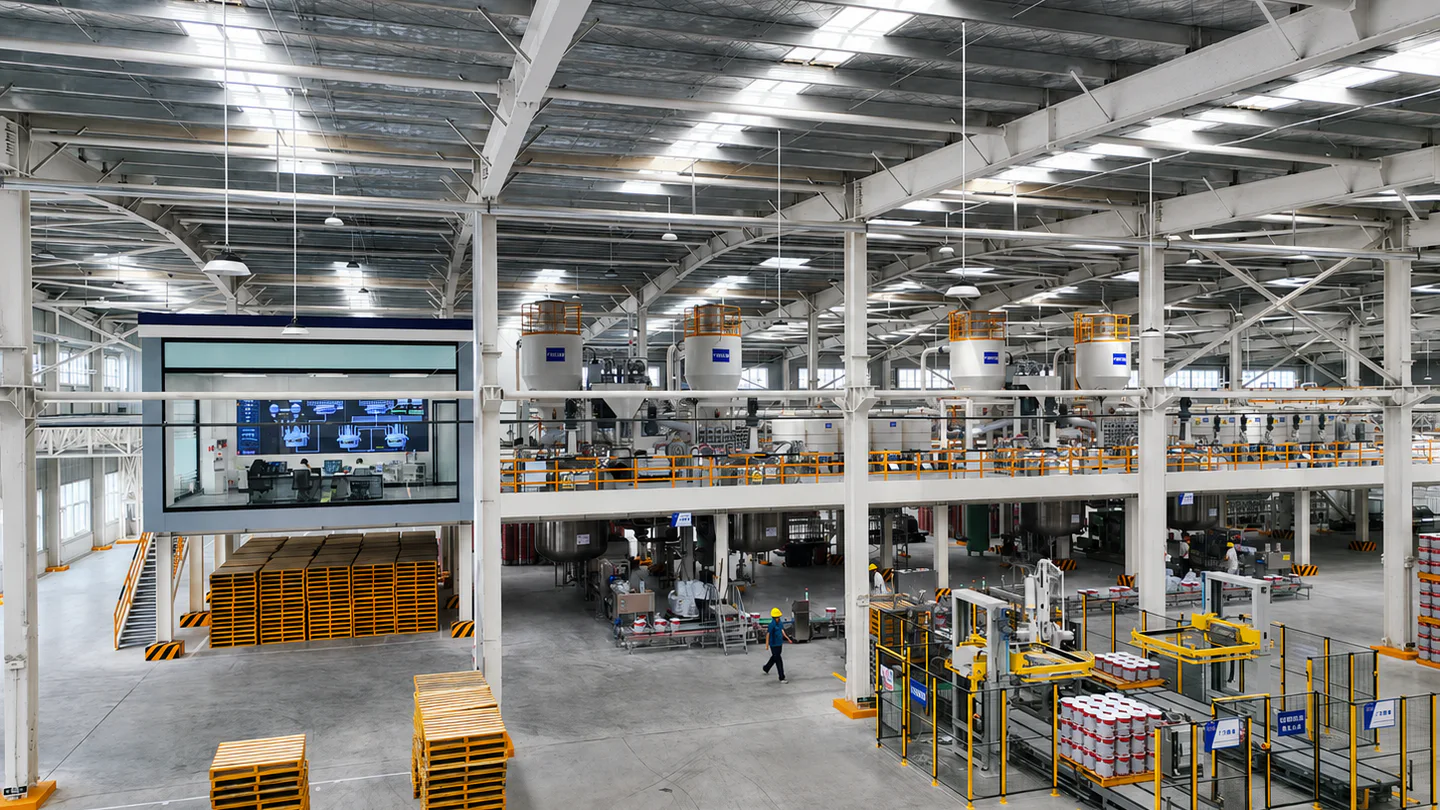
Operations planning includes site layout, equipment selection, input material storage, weighing, mixing, filling, labeling, quality control, retained samples, batch records, safety training, and maintenance. These are not separate from marketing. A factory that cannot repeat production will struggle to defend the brand in the market.
The launch plan should define who approves product documents, who trains operators, who releases batches, who handles complaints, and who updates product information. Clear roles reduce confusion when the first orders arrive.
Common mistakes
- Buying equipment before validating the first product category.
- Choosing too many products for the first launch.
- Ignoring input material availability and vendor reliability.
- Treating sales channels as an afterthought.
- Copying competitor claims without public evidence.
- Launching without quality records or retained samples.
- Underestimating operator training and process discipline.
- Asking for indexing before the website has useful, buyer-focused content.
How MAHACINA supports local market entry
MAHACINA can support local paint factory planning through franchise model discussion, turnkey setup support, technical service, product know-how planning, equipment guidance, and production training. The right scope depends on the owner's target buyer, product line, budget discipline, local market conditions, and long-term brand plan.
A useful discussion should start with market entry, not only equipment. The owner should be ready to explain target buyers, first product categories, local input material situation, preferred sales channel, and the level of technical support needed.
- Paint factory business plan checklist
- Market entry discussion
- Paint factory franchise model
- Turnkey setup support
- Technical service and product planning
- Contact MAHACINA
Map your local paint factory entry plan
FAQ
What is the first step in local paint factory setup?
The first step is market definition. The owner should identify the first buyer segment, first product category, sales channel, and reason local production will be competitive before finalizing equipment or site decisions.
Should a new factory launch many products at once?
Usually no. A focused first product line is easier to control, train, check, sell, and improve. Expansion should follow production experience and market feedback.
Why is local input material review important?
Local input materials affect product adaptation, production stability, cost control, delivery timing, and quality consistency. A plan that ignores supply reality can become difficult to operate.
How does technical support affect market entry?
Technical support helps the factory transfer product know-how, train operators, define process controls, solve production questions, and improve consistency. This is especially important when the owner is new to coating manufacturing.
What information should be prepared before a factory planning discussion?
Prepare the target buyer groups, first product categories, local input material situation, preferred sales channels, available site or building conditions, current team capability, and the type of technical support required. These inputs help turn a broad factory idea into a practical review.